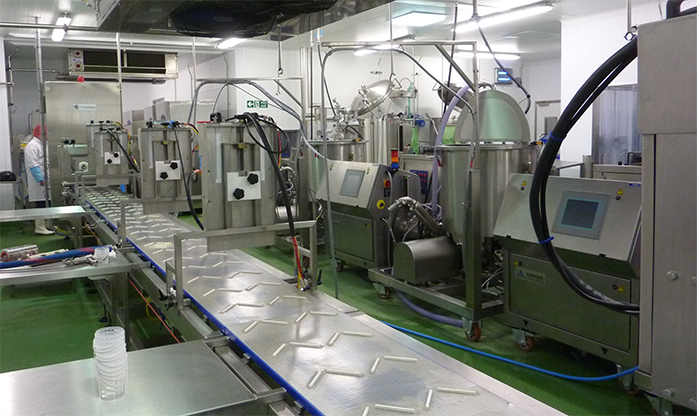
Chilled food production companies face a delicate balancing act. Margins are tight, energy prices are volatile and regulatory expectations around food safety and sustainability are rising. Every design decision, from where to put a freezer to how staff move between rooms, influences operational costs and ultimately the return on investment (ROI) of a facility. This article explores how producers can maximise ROI by focusing on three interrelated pillars: precise temperature‑controlled environments, efficient layout design and leveraging the expertise of Arctica, a UK leader in chilled food facility design.
The ROI imperative in chilled food production
Energy use is one of the largest cost drivers in food manufacturing. Research estimates that producing a single kilogram of food for the retail market can require almost 100 megajoules (MJ) of electricity, roughly the daily energy consumption of a three‑bedroom home. With such high energy intensity, efficiency improvements directly impact profitability.
Designing temperature‑controlled environments for efficiency and safety
Temperature control is essential for product quality and food safety, but it must also be achieved economically. Facility design plays a decisive role in both aspects:
-
Zoning for energy and hygiene – Experts recommend planning temperature‑controlled zones with two objectives: energy efficiency and food safety/quality. Spaces with distinct temperature requirements should not open directly to exterior areas to prevent energy loss and condensation. Separating baking or cooking zones from freezing areas minimises temperature fluctuations and contamination risk.
-
High‑performance building envelope – The thermal resistance (R‑value) of walls, doors and other building elements is critical for temperature control. Using insulated metal panels (IMP) for walls and ceilings can create a “box‑within‑a‑box” that maintains consistent temperatures and eliminates cavity walls. Insulated doors, high‑speed roll‑up doors and airlocks further reduce energy loss when moving between zones.
-
Controlled airflow and HVAC zoning – Airflow dynamics and appropriate HVAC zoning help maintain temperature segregation. Grouping spaces with similar temperature and humidity needs into dedicated zones allows each area to use the right control method: from variable‑volume air systems to zone‑level reheating. Proper airflow also prevents condensation that can lead to microbial growth.
-
Automation to support cold‑room efficiency – Automated guided vehicles (AGVs) and autonomous mobile robots reduce door openings and human presence in cold rooms, decreasing energy consumption and preserving consistent temperatures. Automation also increases storage density and enables 24‑hour operation, providing a clear business case for investment.
By implementing these temperature‑control strategies, producers can reduce energy waste, protect product quality and create conditions that support high returns.
Efficient layout design: flow, flexibility and ergonomics
A facility’s layout determines how materials, products and people move through the production process. Inefficient layouts introduce bottlenecks, increase handling time and make cleaning harder, all of which erode ROI. Leading design principles include:
-
Flow before footprint – Efficient processing lines are designed around product and people flow, not just square footage. Ingredients should move in one clear direction from raw to finished state without unnecessary handling or cross‑traffic. This means clear separation between raw and cooked zones, short transfer distances to minimise temperature loss and logical operator work zones that promote safety.
-
Strategic layout and ergonomic design – We advise positioning equipment and workstations to minimise travel distances, reducing bottlenecks and streamlining workflow. Ergonomic workstations reduce strain and fatigue, improving productivity and morale. Noise‑reducing features and comfortable temperatures also help employees perform at their best.
-
Segregated spaces and cleanability – Effective layouts provide separate areas for manufacturing, packaging and storage to reduce cross‑contamination. Designs should incorporate HACCP principles, easy‑to‑clean surfaces and proper ventilation. Avoiding cross‑traffic between raw and finished goods also simplifies cleaning and reduces food safety risks.
-
Flexibility and scalability – Consumer preferences and product portfolios change rapidly. Modular building components and adaptable layouts allow capacity to be increased or product lines to be reconfigured without major disruption. Arctica emphasises modular design, future‑proofed infrastructure and adaptable layouts to accommodate future growth.
Arctica’s expertise in chilled food production facilities
Operating from King’s Lynn and Cambridgeshire, Arctica has built a reputation as one of the UK’s leading designers of chilled food production facilities. Our approach combines engineering rigour, energy efficiency and a relentless focus on ROI:
-
Advanced refrigeration and HVAC systems – We specialise in state‑of‑the‑art refrigeration systems tailored to each client’s needs, reducing energy use and operational costs. Our energy‑efficient HVAC solutions maintain precise temperature and humidity while minimising consumption.
-
Integrated electrical and building services engineering – Well‑designed electrical systems are essential for powering production equipment, lighting and controls; we integrate energy‑efficient lighting, smart control systems and power‑factor correction to minimise waste. Our holistic building services engineering ensures all systems work together, maximising efficiency across the facility.
-
Strategic layout and automation integration – Our design guide stresses strategic layouts, automation integration and ergonomic design. We work closely with clients to analyse production needs, select reliable equipment and build flexibility into layouts. Modular design and future‑proofed infrastructure allow factories to expand with minimal disruption.
Conclusion
Maximising ROI in chilled food production is not just about cutting costs; it’s about designing facilities that align energy efficiency, food safety and productivity. By investing in high‑performance thermal envelopes, designing layouts around product flow and segregation, adopting flexible and automated systems and partnering with experts like Arctica, producers can transform their facilities into efficient, future‑proof operations. The result is a facility that not only meets stringent temperature and hygiene requirements but also delivers measurable financial returns and environmental benefits.