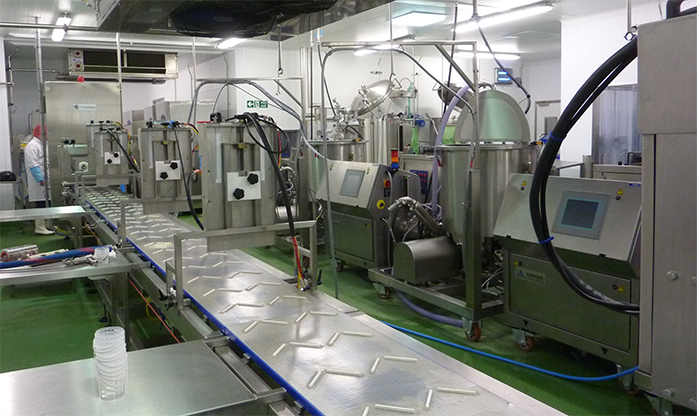
Modern food factories are complex, high-performance environments. But many of the UK’s most productive sites weren’t built yesterday. In fact, plenty of facilities operating today were designed decades ago, long before current hygiene standards, automation trends, or energy efficiency requirements existed.
So, what happens when a factory built for yesterday’s production needs to meet tomorrow’s demand? The answer often lies in retrofitting and refurbishment. And at Arctica, we’ve seen just how transformative these projects can be — when they’re done right.
Breathing New Life into Existing Facilities
Refurbishing a food factory isn’t simply a construction project; it’s a strategic decision. Many businesses reach a point where expansion or relocation seems like the only option. Yet, upgrading an existing plant can often deliver similar outcomes at a fraction of the cost and disruption.
A well-planned refurbishment can improve efficiency, enhance hygiene, and extend the lifespan of a facility by decades. More importantly, it allows businesses to stay operational in familiar locations, often near their existing workforce, suppliers, and transport links.
Of course, every site has its quirks. Low ceilings, legacy utilities, or outdated drainage can all pose challenges. The key is to understand what can be reused, what must be replaced, and how to sequence the works without halting production altogether.
The Importance of a Feasibility Study
Before any design work begins, a thorough feasibility assessment is essential. This is where the foundation for a successful retrofit is laid.
At Arctica, our team starts with a deep-dive into the current facility, analysing everything from floor layouts and services to the thermal envelope and hygiene zoning. We look at how the building performs, how it’s being used, and how its infrastructure can support new technology or processes.
This stage is also where hidden constraints are revealed. For instance, a project might seem simple until structural load limits or outdated insulation materials complicate expansion. By identifying those issues early, the refurbishment can be planned efficiently and safely, without costly surprises down the line.
Balancing Production and Construction
Unlike a new build, a refurbishment project has to coexist with ongoing operations. That’s often the hardest part.
In one recent Arctica project for a chilled food producer, we worked within a live environment, dividing the factory into manageable zones. While construction was taking place in one area, production continued elsewhere. Clean and dirty routes were carefully controlled, and every phase was planned around cleaning schedules and production downtimes.
This approach not only reduced disruption but also helped maintain food safety and staff morale, a balance that’s easy to overlook when deadlines are tight.
Designing for Today – and Tomorrow
A good retrofit doesn’t just fix problems; it rethinks the facility for future growth.
That means upgrading utilities to handle modern automation, improving temperature control for product consistency, and creating more efficient workflows through smarter layouts.
At Arctica, we often integrate modular elements into refurbishment designs. This allows future lines or equipment to be added with minimal rework, a crucial advantage for growing manufacturers. Similarly, we prioritise hygienic design features, such as seamless wall finishes, properly graded drainage, and air pressure zoning, which together reduce contamination risks and make daily cleaning faster and safer.
When these elements come together, the factory doesn’t just look new — it operates like a state-of-the-art facility built for the next generation.
Modernising Utilities and Infrastructure
Retrofitting offers the perfect opportunity to improve utilities systems like HVAC, steam, and water that can have a huge impact on efficiency and compliance.
Outdated plant rooms or poorly insulated pipework can waste energy and increase operational costs. By redesigning these systems with energy efficiency in mind, manufacturers can dramatically cut their running costs. Heat recovery, variable-speed fans, and smarter control systems are no longer luxuries; they’re essential components of modern food production.
And, when integrated correctly, these upgrades can be achieved without major interruptions to production.
Managing Compliance and Hygiene
Food safety standards have evolved significantly in recent years, and compliance is non-negotiable. Retrofitting a facility is the ideal time to ensure that every element — from wall finishes to air handling units, meets BRCGS and HACCP standards.
In many older facilities, hygiene zoning is unclear or poorly maintained. Our design process re-establishes these barriers, defining clear separations between low-care and high-care areas. We also evaluate drainage gradients, door seals, and material selections to eliminate contamination risks and improve cleanability.
The result is a facility that doesn’t just pass audits — it performs better every day.
A Collaborative Approach
Refurbishment projects demand close collaboration between designers, engineers, contractors, and the client’s operational team. Every decision, from scheduling shutdowns to choosing flooring materials, affects production.
Arctica’s multidisciplinary team bridges that gap. We work as both designers and project partners, ensuring every aspect of the retrofit aligns with the client’s operational needs and business goals. By managing the process from concept through to commissioning, we help clients avoid the communication breakdowns that can delay or derail complex refurbishments.
The Long-Term Payoff
While refurbishments require careful planning and investment, their long-term benefits are substantial. Reduced maintenance costs, improved energy performance, and enhanced staff safety are just the beginning.
More importantly, a successful retrofit preserves the value of an existing asset and provides a platform for sustainable growth, something that’s especially vital in a sector where margins are tight and efficiency is everything.
For many of Arctica’s clients, these projects have delivered ROI within three to five years, simply through reduced downtime and improved process flow.
Frequently Asked Questions
What’s the difference between a refurbishment and a retrofit?
A refurbishment usually focuses on restoring or modernising existing structures, while a retrofit integrates new systems or technologies — like automation or energy recovery — into the facility.
Can a food factory be refurbished while still in operation?
Yes, with the right phasing plan and hygiene controls. Arctica specialises in live-environment refurbishments to minimise disruption.
Do I need planning permission for a retrofit?
In most cases, internal works don’t require planning consent, but external changes or extensions often do. We handle all relevant approvals as part of the design process.
Is it more cost-effective to retrofit or build new?
It depends on the site condition, available space, and production goals. Many clients find refurbishment offers a faster ROI with lower disruption and less environmental impact.
How can Arctica help?
We provide full end-to-end food factory refurbishment design, including feasibility studies, concept design, utilities integration, and project management.
Conclusion
Refurbishing or retrofitting a food factory is about more than aesthetics, it’s about unlocking the hidden potential within your existing walls.
With the right expertise and planning, older facilities can achieve modern standards of efficiency, safety, and sustainability. At Arctica, we help manufacturers transform ageing plants into future-ready production spaces, delivering upgrades that protect investments and enhance operational excellence.