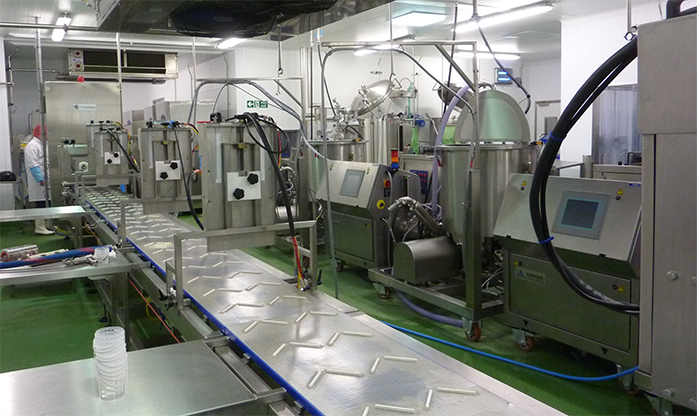
Automation is no longer just a buzzword—it’s a strategic necessity in today’s food manufacturing landscape. From packaging and palletising to inspection and slicing, the introduction of robotics in food processing plants is redefining how facilities operate.
At Arctica, we’ve seen first-hand how smart automation can improve efficiency, reduce downtime, and deliver measurable ROI. Whether you’re retrofitting an existing facility or planning a new build, understanding how to implement automation effectively is key to future-proofing your business.
1. Understanding the Levels of Food Factory Automation
Before investing, it’s crucial to know where your facility stands on the automation spectrum:
-
Manual operations – Human-driven, low capital cost but higher ongoing labour and safety risks.
-
Semi-automated systems – Machines assist humans; good for repetitive or precision tasks.
-
Fully automated systems – Robotics handle end-to-end production, often integrated with sensors and data systems.
Each level has its place. The right approach depends on your product type, batch size, hygiene requirements, and ROI targets.
2. Why Food Processing Automation Matters More Than Ever
The food industry faces unique pressures:
-
Rising labour costs and shortages.
-
Increasing hygiene and safety standards.
-
Demand for product consistency and traceability.
Automation helps overcome these challenges by:
-
Improving consistency and quality control.
-
Reducing downtime and waste.
-
Enhancing safety and hygiene through less human contact.
-
Allowing for data-driven production via integrated control systems.
In short, automation is not about replacing people—it’s about enabling smarter, safer, and more efficient production.
3. Robotics in Food Manufacturing: The Key Technologies
The food sector has historically lagged behind automotive or electronics when it comes to robotics—but that’s changing fast.
Modern applications include:
-
Pick-and-place robots: Ideal for packaging baked goods, meat, or ready meals.
-
Vision-guided systems: Detect shape, colour, and defects for quality inspection.
-
Collaborative robots (cobots): Work safely alongside humans in confined spaces.
-
Automated palletisers and conveyors: Streamline logistics and end-of-line handling.
-
Automated guided vehicles (AGVs): Move ingredients or products efficiently around the facility.
By integrating robotics early in the factory design phase, you can optimise layout, power distribution, and safety zoning to support future scalability.
4. Designing for Automation: What to Consider
Successful automation isn’t just about buying machines—it’s about designing the environment around them.
Here are key design principles Arctica applies when planning automated plants:
| Design Element | Why It Matters |
|---|---|
| Space & Layout | Sufficient clearance for robots, conveyors, and maintenance access. |
| Hygiene Zones | Segregated zones to prevent contamination in high-care areas. |
| Utilities | Reliable power, air, and control systems sized for automation loads. |
| Safety | Proper guarding, e-stops, and operator interfaces per UK standards. |
| Flexibility | Modular design allows for future line expansion or equipment changes. |
Good design anticipates not only today’s equipment but also tomorrow’s innovations.
5. Calculating ROI: Making Automation Work Financially
The most common question we hear: “Will automation pay off?”
The answer depends on the scope, but well-planned automation usually delivers ROI in 2–4 years through:
-
Lower labour costs
-
Higher throughput
-
Reduced product waste
-
Less downtime
-
Improved energy efficiency
At Arctica, we help clients build detailed ROI models, comparing CAPEX to long-term savings in productivity, energy, and compliance.
6. Phased Adoption: Start Small, Scale Smart
Many successful food manufacturers don’t automate everything at once. They start small—then scale up.
Phased automation strategies may include:
-
Automating repetitive packaging or inspection tasks first.
-
Expanding into ingredient handling or mixing once ROI is proven.
-
Integrating automation into your factory control system for end-to-end data visibility.
This staged approach reduces risk and allows staff to adapt gradually to new technologies.
7. Partnering with the Right Food Factory Design Experts
Automation requires a cross-disciplinary approach—combining engineering, design, and food safety expertise.
That’s where Arctica adds value. We work with clients from concept to commissioning, ensuring every aspect of factory design—from utilities and layout to hygiene zoning—is ready for advanced automation.
Our integrated design solutions ensure:
-
Seamless coordination between mechanical, electrical, and process systems.
-
Optimised workflows that minimise bottlenecks.
-
Compliance with BRCGS, HACCP, and UK food hygiene standards.
Frequently Asked Questions
1. What types of food factories benefit most from automation?
Almost any facility can benefit—particularly bakeries, ready-meal producers, and beverage manufacturers where consistency and throughput are key.
2. How long does it take to implement automation?
Small-scale systems can be installed in a few weeks. Full line integrations may take several months, depending on design complexity and equipment sourcing.
3. Is automation suitable for small or medium food producers?
Yes. With modular equipment and cobots, automation is more accessible than ever. It’s not just for large corporations anymore.
4. What’s the biggest mistake companies make when automating?
Not involving factory designers early enough. Poor layouts or utilities can make automation inefficient or even unfeasible later.
5. How does automation impact hygiene and safety?
It often improves both. Robots reduce human contact with food, and automated cleaning systems (CIP) maintain consistent sanitation standards.
6. How can Arctica help with automation projects?
We provide end-to-end food factory design, integrating automation needs from the start. This ensures your project meets compliance, efficiency, and ROI goals.
Conclusion
Implementing automation and robotics in food processing plants isn’t just about cutting-edge technology—it’s about designing smarter facilities that can grow with your business.
Whether you’re upgrading an existing plant or designing a new one, automation can unlock new levels of productivity, consistency, and profitability.
Partner with Arctica to make your automation journey seamless—from planning and design to commissioning.